

 Seller
 Buyer
Buyer
India’s MSME sector is undergoing a major financial transition.
Many businesses operated with a familiar problem for years. Sales were increasing, purchase orders were coming in, and client relationships remained stable, yet liquidity pressure continued to build internally. The issue was rarely demand. It was delayed payments.
Across industries, MSMEs often wait between 45 to 120 days to receive payments from buyers. During this period, production expenses continue. Vendor obligations remain active. Salaries, logistics costs, and procurement cycles cannot pause simply because receivables are pending.
This gap between delivery and payment has historically disrupted working capital planning for many businesses.
As India moves toward formal digital trade ecosystems, receivables financing is becoming more structured. One of the most important developments in this shift has been the rise of the TReDS portal ecosystem.
For many small and medium enterprises, understanding the TReDS registration process is now becoming operationally important rather than optional.
The system is helping businesses unlock liquidity against approved invoices while participating in a regulated and digitally transparent financing framework.
What Is TReDS?
Before understanding the TReDS registration process, it is important to understand the framework itself.
TReDS stands for Trade Receivables Discounting System.
It is an RBI-regulated digital ecosystem designed to facilitate invoice discounting for MSMEs.
Under this structure, MSMEs can upload invoices raised on corporate buyers or government entities after buyer acceptance. Financial institutions then bid to finance those receivables, allowing MSMEs to receive early payments instead of waiting for long settlement cycles.
The purpose of the TReDS portal is straightforward.
It improves liquidity access for small and medium enterprises by converting trade receivables into financeable working capital assets.
More importantly, the system introduces transparency, digital verification, and structured financing workflows into the MSME receivables ecosystem.
Why TReDS Registration Is Becoming Increasingly Important
The importance of TReDS registration has increased significantly in recent years.
India’s policy ecosystem is gradually moving toward greater formalisation of MSME financing and payment discipline. Corporate participation in receivables financing systems is also increasing.
At the same time, MSMEs themselves are recognising that liquidity efficiency directly affects business continuity. A profitable business can still experience operational strain if receivables remain locked for extended periods.
This is why more small and medium enterprises are actively exploring receivables financing ecosystems through the TReDS portal.
The objective is not only faster funding.
It is also about maintaining healthier working capital cycles, reducing dependency on informal borrowing, and improving financial predictability.
Who Can Register on the TReDS Portal?
The TReDS portal ecosystem primarily supports three participants:
- MSME sellers
- Corporate buyers
- Financiers
For MSMEs, eligibility generally depends on valid business registration and operational trade activity with buyers participating within the ecosystem.
Most small and medium enterprises that supply goods or services to corporates can participate, provided the invoices meet platform and financing requirements.
The growing participation of corporates and financial institutions is helping expand financing accessibility across industries.
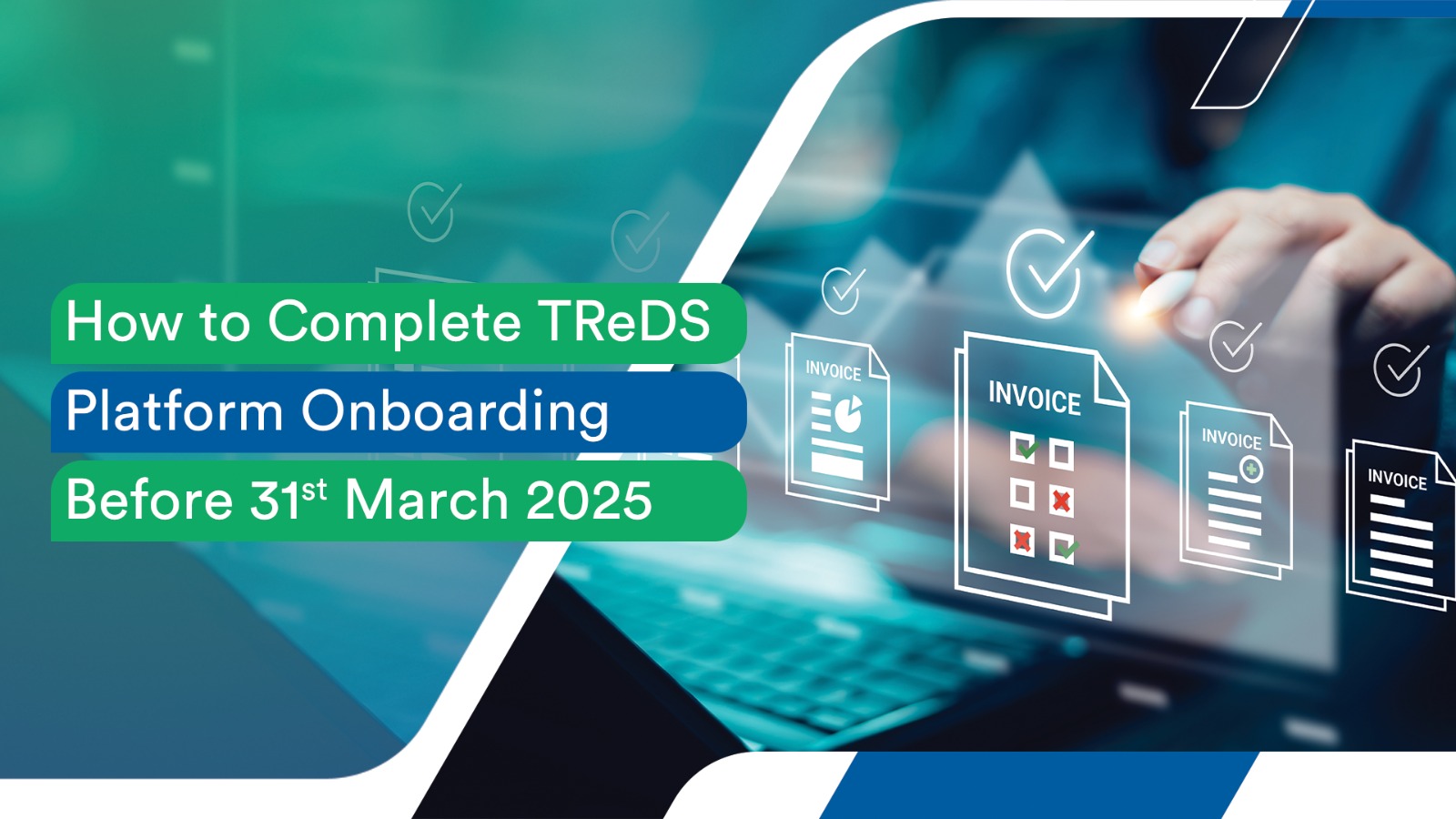
Step-by-Step TReDS Registration Process
The TReDS registration process is designed to be digital and structured. While operational details may vary slightly across platforms, the overall framework generally follows a standard sequence.
Step 1: Business Identification and Eligibility Verification
The process begins with business verification.
MSMEs are typically required to provide basic organisational details, including:
- PAN information
- GST details
- Business registration certificates
- Udyam registration information
- Bank account details
- Authorised signatory information
This stage establishes identity validation within the TReDS portal ecosystem.
For small and medium enterprises, maintaining updated compliance documentation helps speed up onboarding.
Step 2: Submission of KYC and Financial Information
After basic verification, businesses are required to submit KYC and financial documentation.
This may include:
- Financial statements
- GST returns
- Bank statements
- Business proof documents
- Authorisation letters
The objective is to create structured financial visibility for participating financiers. Digital onboarding processes have significantly improved onboarding efficiency compared to conventional financing structures.
Step 3: Buyer Mapping and Relationship Validation
One of the most important stages in the TReDS registration process
is buyer mapping.The MSME’s corporate buyers are linked within the system to establish invoice validation workflows.
This is critical because financing on the TReDS portal depends on buyer-approved receivables.
The stronger and more active the buyer ecosystem, the more efficiently financing workflows operate for small and medium enterprises.
Step 4: Platform Approval and Activation
Once documentation and buyer mapping are verified, the account is activated within the platform ecosystem. At this stage, MSMEs can begin uploading invoices for discounting.
The digital nature of the TReDS portal significantly reduces operational friction associated with traditional receivables financing processes. Businesses gain access to structured invoice financing within a regulated environment.
Step 5: Invoice Upload and Financing Request
After successful TReDS registration, MSMEs can upload invoices raised against buyers participating on the platform.
The buyer digitally accepts the invoice.
Once accepted, financiers bid to finance the receivable.
The MSME receives early payment against the invoice value while the buyer settles the amount with the financier on the due date.
This creates faster liquidity circulation across supply chains.
How TReDS Improves Liquidity for MSMEs
The biggest operational advantage of the TReDS portal is liquidity acceleration.
Instead of waiting through extended payment cycles, businesses gain faster access to working capital linked directly to trade transactions.
For many small and medium enterprises, this improves:
- Procurement continuity
- Vendor payment cycles
- Inventory management
- Production scheduling
- Working capital visibility
The financing structure is transaction-driven rather than purely collateral-driven.That distinction is important.
Historically, many MSMEs struggled to access flexible working capital because traditional financing depended heavily on asset-backed lending structures.
The TReDS registration ecosystem changes this dynamic by enabling financing against approved receivables.
Why Digital Receivables Financing Is Expanding Rapidly
India’s financial ecosystem is becoming increasingly digitised.
Trade finance infrastructure is gradually shifting toward transparent, data-led, and digitally connected systems.
The TReDS portal reflects this larger transformation.
Businesses today expect financing systems to operate with greater speed and visibility. Manual financing workflows are becoming operationally inefficient in fast-moving supply chain environments.
Digital receivables financing ecosystems improve transaction visibility for all participants.
MSMEs gain funding access.
Financiers gain structured risk visibility.
Corporates gain more stable supplier ecosystems.
This interconnected structure is helping expand formal financing participation among small and medium enterprises across India.
Common Challenges MSMEs Should Prepare For
While the TReDS registration process is becoming more streamlined, MSMEs should still prepare operationally before onboarding.
Incomplete documentation can delay verification.
Businesses should also ensure that their buyers actively participate within the ecosystem because invoice approval remains central to receivables financing.
Additionally, maintaining proper invoice discipline and transaction transparency improves financing continuity over time. The more structured the transaction ecosystem, the smoother the financing experience becomes.
The Growing Role of TReDS in India’s MSME Financing Ecosystem
The role of the TReDS portal is steadily expanding beyond invoice discounting alone.
It is gradually becoming part of India’s broader MSME financing infrastructure.
As digital trade ecosystems evolve, receivables financing is expected to play a larger role in supporting working capital efficiency across industries.
Platforms such as M1xchange are contributing toward digitally connected receivables financing ecosystems by enabling MSMEs, corporates, and financiers to participate within structured invoice-led financing workflows. Through digital onboarding, transaction visibility, and financing access, such ecosystems help improve liquidity participation for small and medium enterprises operating within formal supply chain networks.
This reflects a broader transition toward technology-enabled MSME finance infrastructure in India.
Conclusion
India’s MSME sector is becoming increasingly integrated with formal digital financing ecosystems.
However, liquidity delays continue to remain one of the most persistent operational challenges for businesses across industries.
This is precisely why the TReDS registration process is becoming increasingly relevant for modern MSMEs.
By enabling businesses to access early liquidity against approved receivables, the TReDS portal helps improve working capital continuity, strengthen supply chain participation, and support healthier financial operations for small and medium enterprises.
As regulatory focus on digital trade finance and payment discipline continues to increase, receivables financing ecosystems are expected to become even more important within India’s financial infrastructure.
For MSMEs looking to scale sustainably, structured receivables financing is no longer just an alternative funding route.
It is steadily becoming part of mainstream business finance strategy.