

 Seller
 Buyer
Buyer
When you’re a part of India’s ever-evolving MSME landscape, access to timely working capital must be a challenge for you. Plus, there are a number of factors that hinder the growth potential of an organisation, like late payments from buyers, long credit cycles, and limited collateral. To bridge this gap of finances, the Reserve Bank of India has introduced a very effective and transformative initiative: TReDS.
Let’s explore everything about TReDS, from its full form to the registration process it entails, eligibility criteria for it, and the core benefits of transacting on a TReDS platform like M1xchange.
What is TReDS?
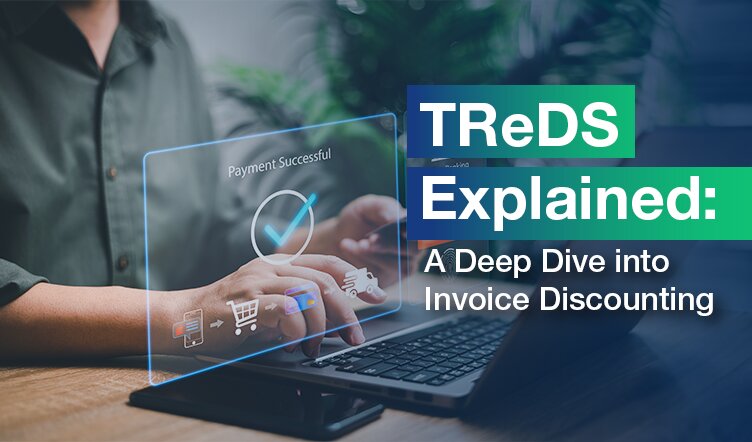
Starting with the abbreviation only, TReDS stands for Trade Receivables Discounting System. It’s an RBI-regulated digital platform designed to facilitate the financing of trade receivables for Micro, Small and Medium Enterprises (MSMEs).
TReDS was launched in 2017, enabling MSME suppliers to have discounted invoices that have been raised on large corporates, PSUs, or government departments through a competitive bidding process conducted by banks and NBFCs. This entire process is fully digitalised, making it secure and without recourse to the supplier.
M1xchange is one of the three TReDS platforms in India that comes under RBI-approved lists under the Payment and Settlement Systems Act, 2007, and has since become a trusted solution for MSMEs across India.
Why TReDS Matters for MSMEs?
For small businesses, there are a number of factors that they have to address in order to earn profit, but delayed payments are something that, no matter what, they can’t escape. In fact, if we look at the reports, MSMEs are owed thousands of crores in receivables due to extended payment cycles. TReDS can help them address this challenge. Here’s how:
- Providing instant liquidity against unpaid invoices.
- Reducing dependency on informal credit.
- Improving cash flow and working capital management.
- Enabling faster payment cycles from buyers.
In essence, the TReDS platform promotes financial inclusion and strengthens India’s supply chain ecosystem.
How Does the TReDS Platform Work?
Getting to know how TReDS works isn’t as complicated as one may expect. Here’s a simple overview of its process:
- It all starts when an MSME supplier raises an invoice on a buyer (corporate/PSU).
- The buyer then approved the invoice digitally on the TReDS platform.
- The invoice is made available for discounting via the auction.
- Multiple financiers (banks/NBFCs) bid to discount the invoice.
- The supplier selects the best offer and receives immediate payment.
- And finally, on the date when the invoice is due, the buyer pays the financier directly.
This entire cycle may sound like a long process, but it is actually completed within 24-48 hours, making TReDS one of the fastest and most efficient working capital solutions available to Indian MSMEs.
TReDS Registration: Who Can Participate?
The TReDS ecosystem includes three primary participants. Let’s understand each of them:
- MSME Supplier
- Registered as micro, small, or medium enterprises.
- Can be proprietors, partnerships, LLPs, or private/public limited companies.
- The company or organisation must have a GST registration and business PAN.
- Should be selling to large corporates, PSUs, or government departments.
- Buyers
- Buyers are basically large private corporations, public sector undertakings or government departments.
- They’re the ones responsible for approving invoices on the platform.
- Their strong credit rating ensures confidence among financiers.
- Financiers
- They are the scheduled commercial banks, foreign banks, NBFCs and financial institutions.
- Participate in bidding to offer the best discounting rates to suppliers.
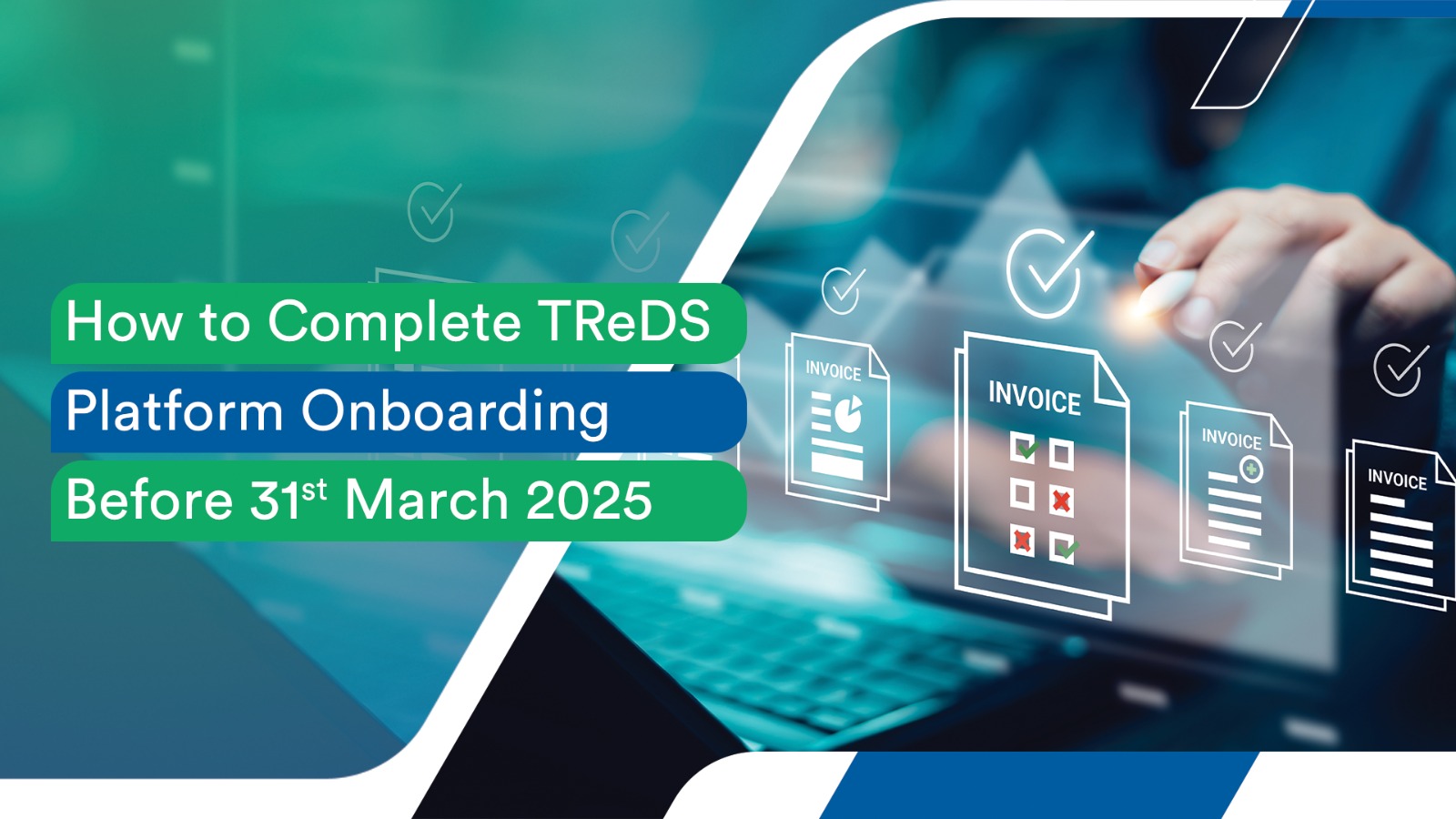
TReDS Registration Process on M1xchange
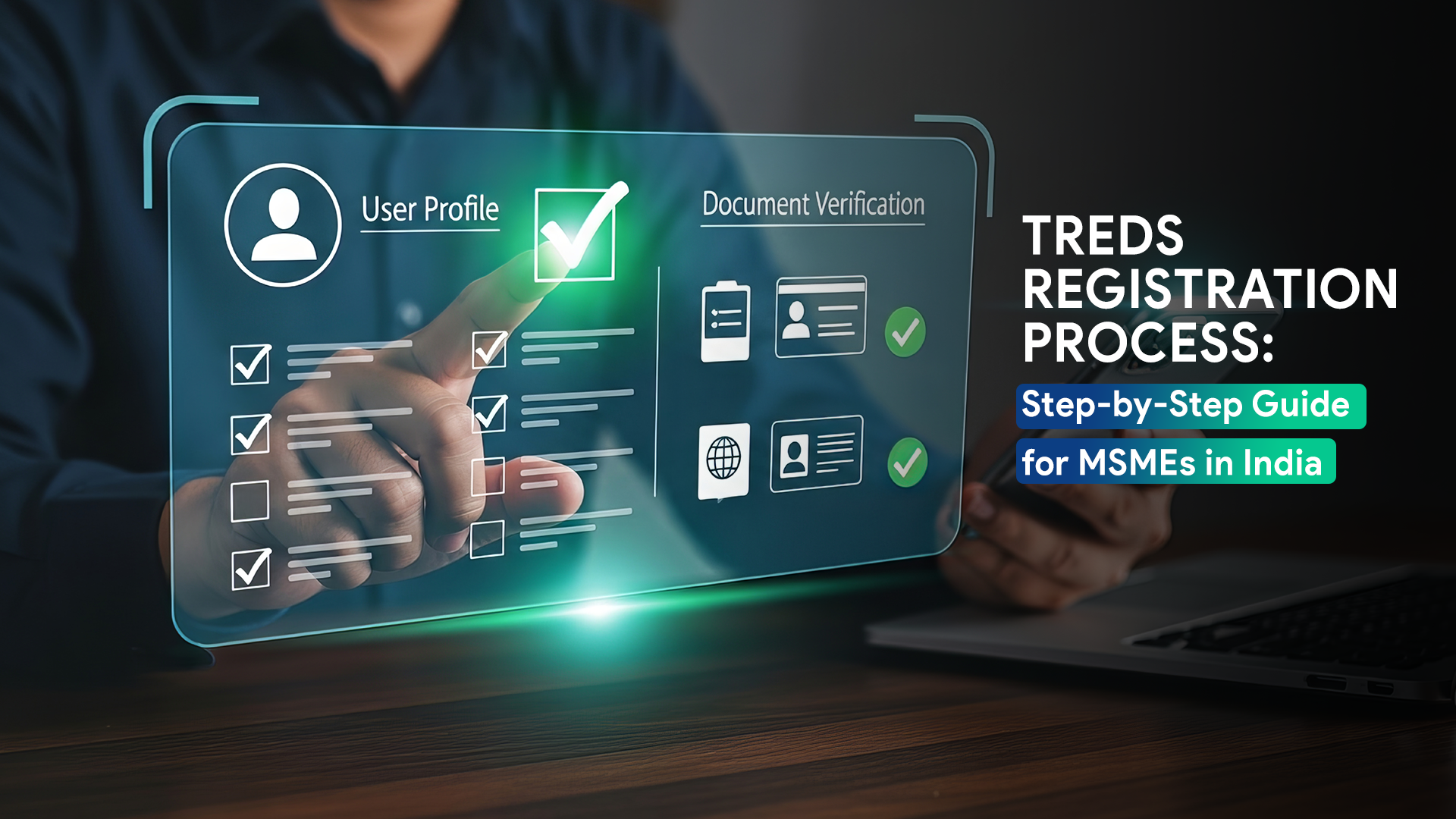
Just like the process of registering for TReDS is straightforward, getting started on M1xchange is simple and efficient too. Here’s a step-by-step guide for it:
Step 1: Contact the M1xchange Team
- Express interest via the website or through a relationship manager.
- Get a dedicated onboarding executive for support.
Step 2: Document Submission
- PAN card and GST certificate.
- MSME registration or Udyam certificate.
- Bank account details (cancelled cheque).
- Board the resolution or partnership deed.
- KYC documents of authorised signatories.
Step 3: Verification and KYC Compliance
- M1xhange will verify the submitted documents.
- Then the digital KYC and due diligence will be completed.
Step 4: User Credential Creation
- Once the documents are verified, user credentials for the TReDS platform will be shared.
- Access to dashboards, invoice upload, and bidding interfaces is enabled.
Step 5: Start Discounting Invoices
- Upload the approved invoices.
- Receive bids from financiers.
- Choose the best offer and receive funds in 24-48 hours.
This entire process is fully in compliance with RBI regulations and ensures data confidentiality on all levels, security and transparency.
Advantages of Registering on a TReDS Platform
When you register for a TReDS platform with organisations like M1xchange, you get to access several benefits, like:
1. Improved cash flow
Get instant payment for approved invoices without even waiting for the buyer’s credit cycle.
2. No collateral required
Unlike traditional loans, TReDS financing is based on the buyer’s creditworthiness, not on assets or guarantees from MSMEs.
3. Without recourse” to the supplier
MSMEs are not liable for repayment if the buyer defaults (as per RBI guidelines), reducing financial stress.
4. Lower cost of funds
MSMEs get the best possible rate here as the banks and NBFCs are bidding to finance the invoice.
5. 100% Digital and transparent
The platform ensures an audit-ready trail of transactions, easy access to invoice history, and secure document storage.
6. PAN-India reach
MSMEs from any location in India can register and access the platform, facilitating equitable access to working capital.
India’s TReDS initiative is truly transforming how MSMEs access finance. By facilitating invoice discounting through regulated digital platforms, TReDS empowers small businesses and lets them grow without being restricted by credit cycles or delayed payments.
Tags: TReDS, TReDS India Last modified: December 24, 2025